
A More Resilient
Energy Future
in Flow
Kangro Energy is developing next-generation aqueous redox flow battery solutions for stationary energy storage—building on decades of electrochemical research while pursuing higher performance, scalable architecture and practical long-duration storage.
Energy Stored in Flow
Redox flow batteries store electroactive materials in external liquid electrolyte tanks and circulate them through an electrochemical stack. This separates much of the energy-storing material from the power-producing reactor, allowing system designers to tailor stored energy and power more independently than in many conventional battery architectures.
Aqueous RFB research focuses on combining safety, scalability and long service life with higher energy density, higher power density and lower system cost.
Explore the Technology →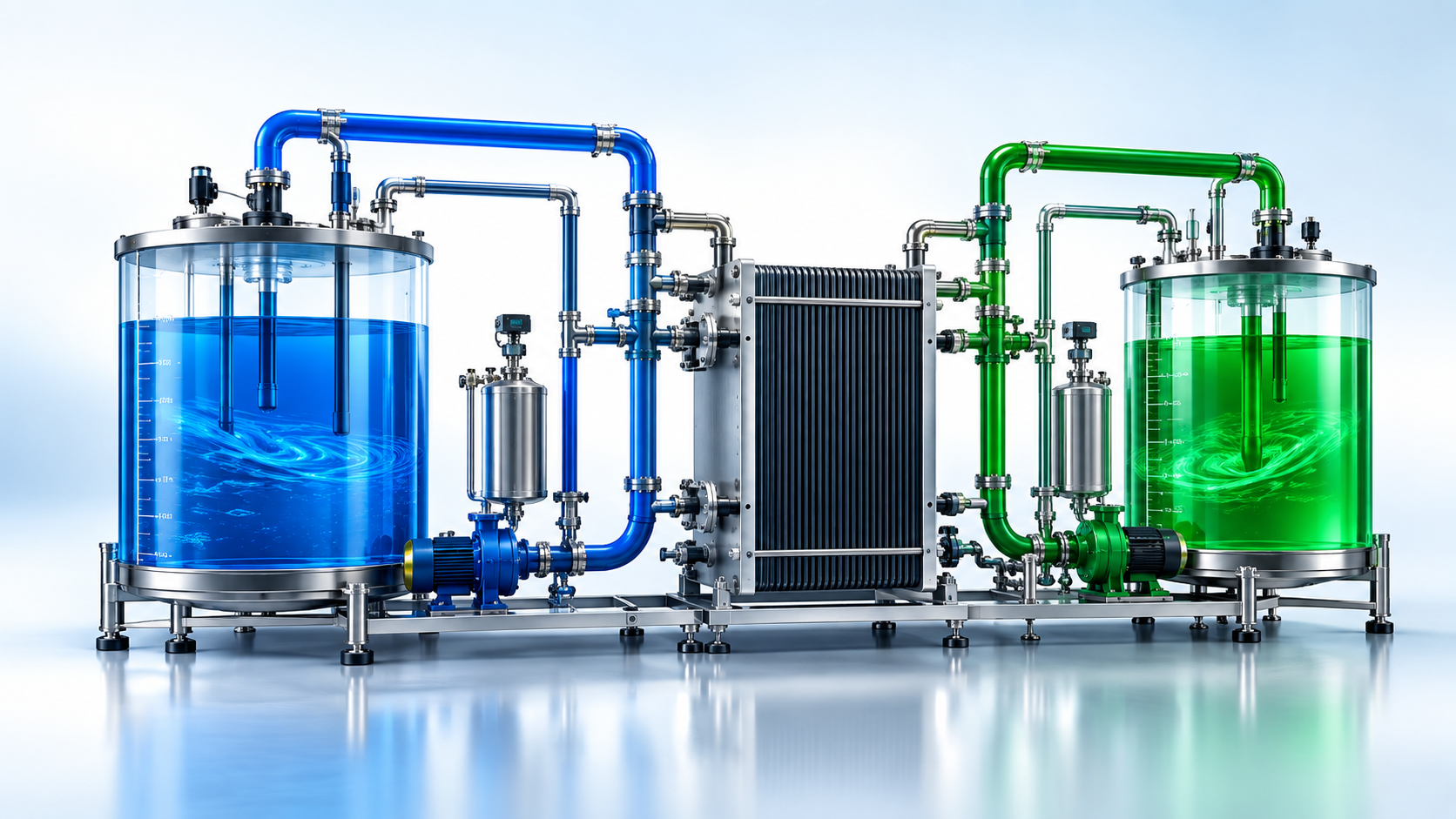
Designed for Stationary Storage
Decoupled Scaling
Tank and electrolyte inventory largely determine energy capacity, while electrochemical stack design largely determines power.
Aqueous Safety
Water-based electrolytes are nonflammable, an important attribute for stationary storage.
Long Duration
RFB architecture is widely studied for multi-hour and variable-duration grid applications.
Flexible Chemistry
Research spans vanadium, iron, zinc-based, organic and other emerging redox couples.
Storage for a Changing Grid
Grid-Scale Storage
Supporting renewable generation and grid flexibility.
Commercial & Industrial
Stationary storage for facilities and energy users.
Renewable Integration
Shifting energy across periods of generation and demand.
Energy Resilience
Supporting more flexible electricity infrastructure.
Why Kangro Energy?
Kangro Energy is named in recognition of Walther Kangro, whose 1949 patent described a rechargeable battery architecture using circulating redox-active liquid electrolytes. Historical reviews describe it as the first battery type similar to today's redox flow batteries.
The field then advanced through major milestones: NASA's Fe/Cr work in the 1970s helped establish modern RFB engineering, while Professor Maria Skyllas-Kazacos and colleagues at UNSW developed the all-vanadium redox flow battery beginning in the 1980s.
Our Story & RFB History →